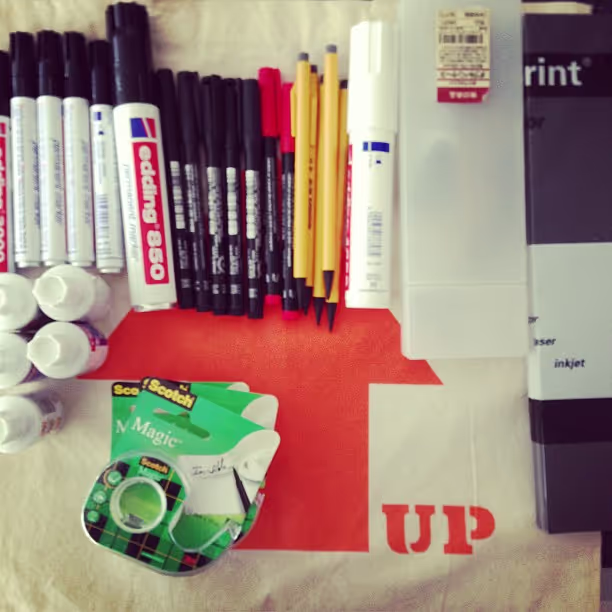
TypeCooker: an exercise machine for exploration, teaching, lettering, sketching + typedesign.
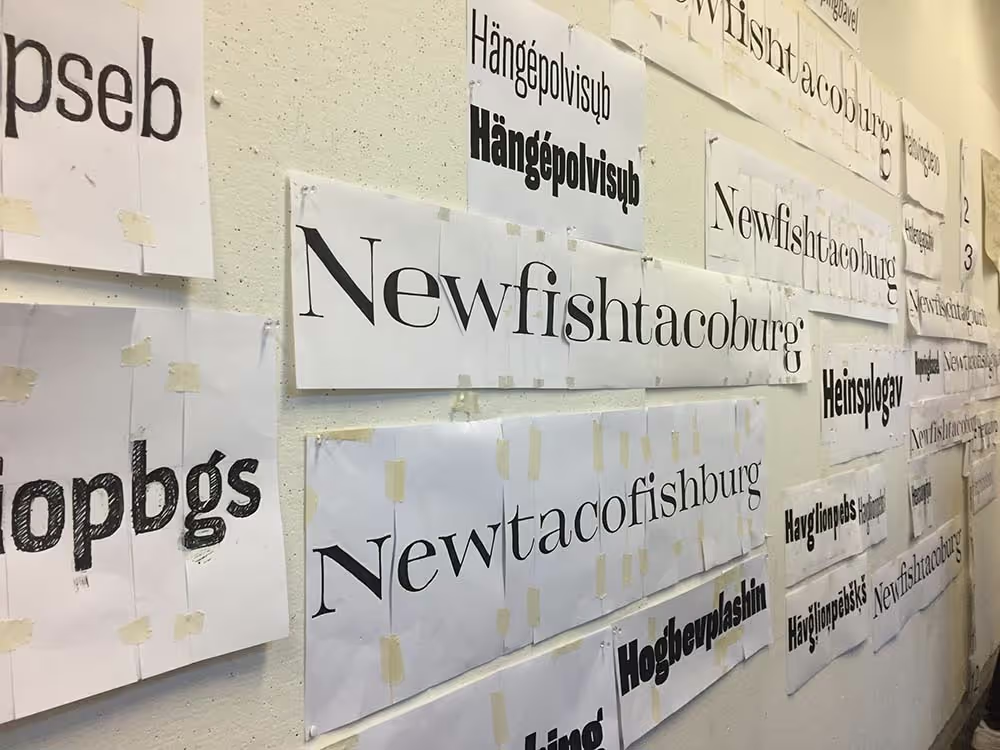
The pinboard in the TypeMedia studio filled with TypeCooker work. Drawings on paper allow easy spacing interventions.
TypeCooker is an exercise generator for those interested in type design and lettering. It chooses randomly from lists of carefully picked parameters, in varying degrees of difficulty (more or fewer parameters) and complexity. The task is then to draw letters that incorporate as many of the parameters as possible. Participants can learn to use a shared vocabulary when discussing atributes of the shapes. TypeCooker exercises can be a safe context to practice formulating and receiving criticism.
A TypeCooker recipe can look like this:
- Ascender: Shorter Than Normal
- Stems: Slightly Concave
- Descender: Longer Than Normal
- Construction: Capitals
- Width: Very Wide
- Weight: Extra Bold
- Contrast: Amount Some
- Application: Smooth Offset Printing
- Stroke: Endings Rounded, No Serif
- Contrast Type: Translation
Reading this all sorts of questions pop up: What is normal contrast?”, “Is this bold enough?” Almost always a starting point for an interesting discussion, and these questions can always be answered with a drawing.
The recipes are not much more than randomly chosen words. But exercise demands an objective analysis and reasoned approach to the drawing. TypeCooker can generate conflicting requirements. This is by designL it makes it necessary to prioritise and sometimes dismiss requirements. This can be a valuable disovery for a student.
TypeCooker is very flexible and can be used in different ways. It is suited for workshops and structured classes. But it works evenly well for individual practice.
Single drawing
The easiest way to start. Generate a recipe and draw something that checks as many boxes as you can. You can cut the letters from the page to respace them. Use fewer or more parameters.
Variations
Make variations on one of the parameters. What does this recipe look like in bold, or thin?
Iterations
Make an initial drawing. Then draw it again, using tracing paper. Move details around, pay attention to counters and spacing.
Collaborate
Student draws a recipe. Then they swap drawings with their neighbor and make a new iteration. They explain their changes. An exercise in communication and critiqueing.
Origin
TypeCooker is much indebted to the classes, ideas and writings by Gerrit Noordzij. He identified contrast flavor, contrast amount, weight, proportion and so on. The current TypeCooker parameter list adds a few more hoops to jump through.
The first version of TypeCooker must have been around 2004, possibly a python script running on a private
server. It went through several iterations, with new, or rephrased requirements.
the TypeCooker website
A selection of slides from a TypeCooker talk.
Usage
Usage of the TypeCooker name and ideas: as an educational tool, TypeCooker is free and will always be free. But under some conditions:
You can not make branded products for sale with the TypeCooker name.
If you do a TypeCooker workshop, you must link back to the original site the TypeCooker website.
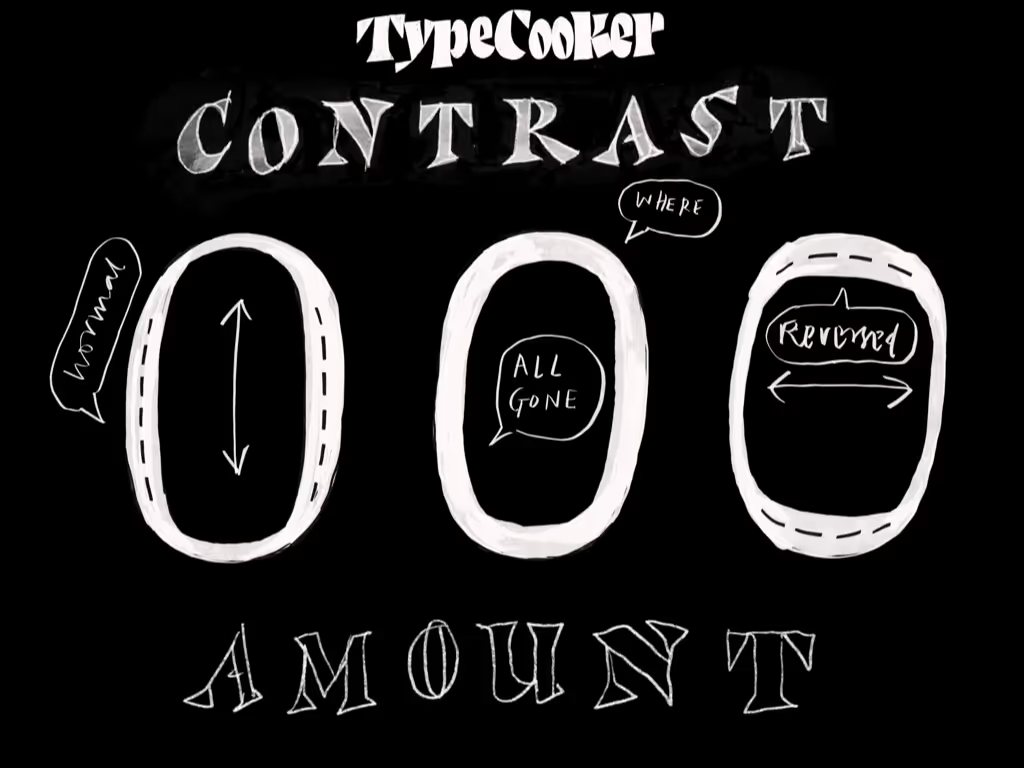
You need to think about where the contrast should go and how much.
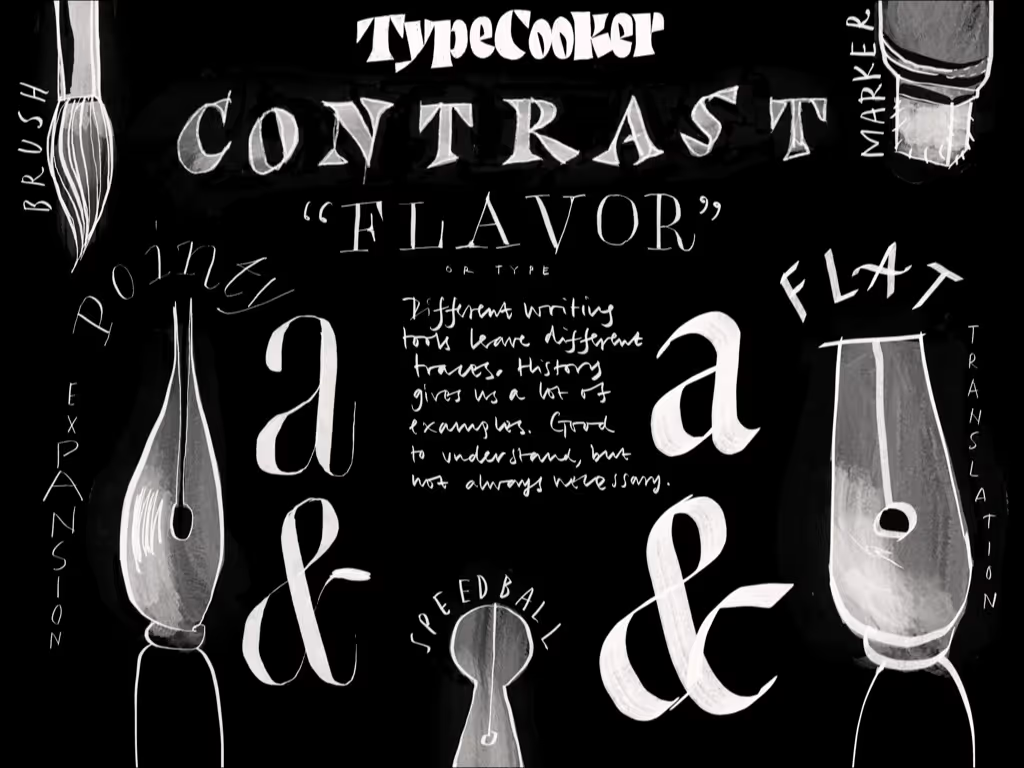
The flavor of contrast and the amount of contrast. This is the moment to tell you that these are not the only tools to make contrast. They were influential, in the evolution of Latin printing types, but definitely not the only sources.
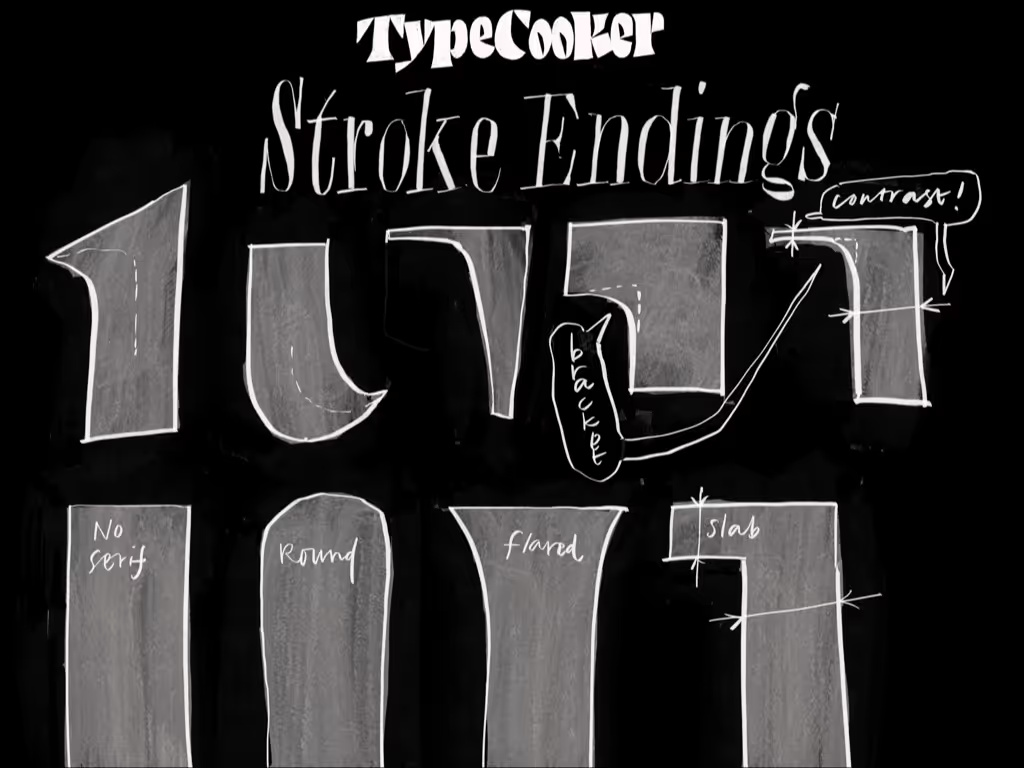
Terminals, stroke endings, serifs. Many different ways to mark the beginning and the end of a stroke.

It helps to consider the size and scale when making decisions about contrast, proportion and weight.
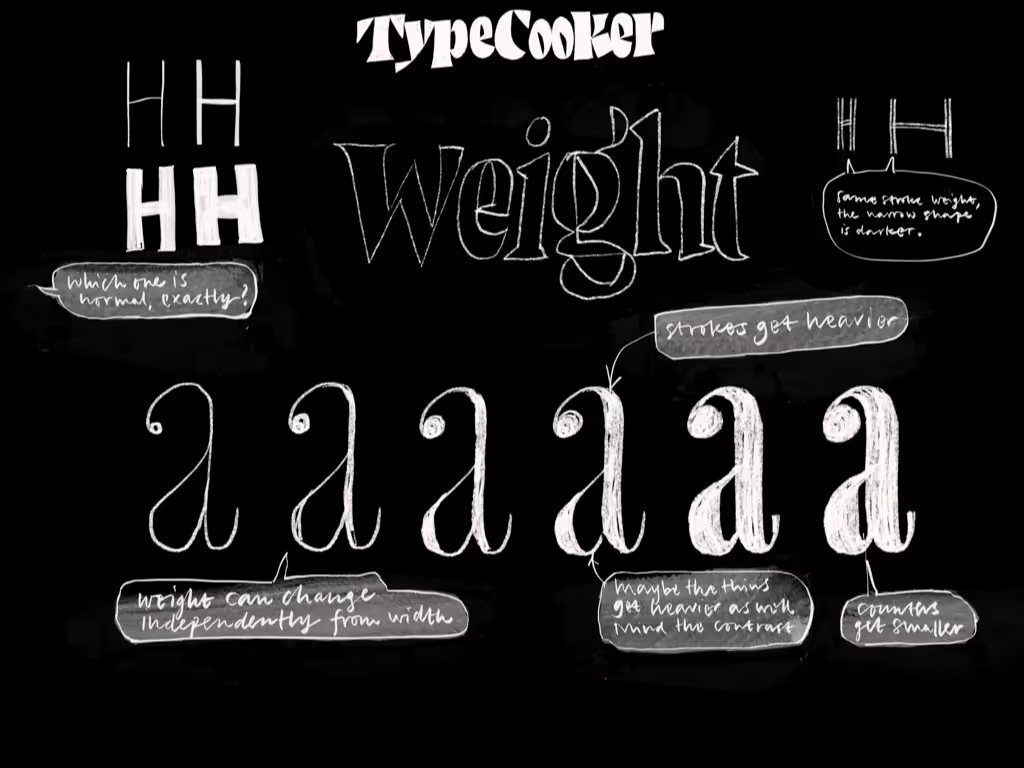
Everybody’s favorites: weight and width.
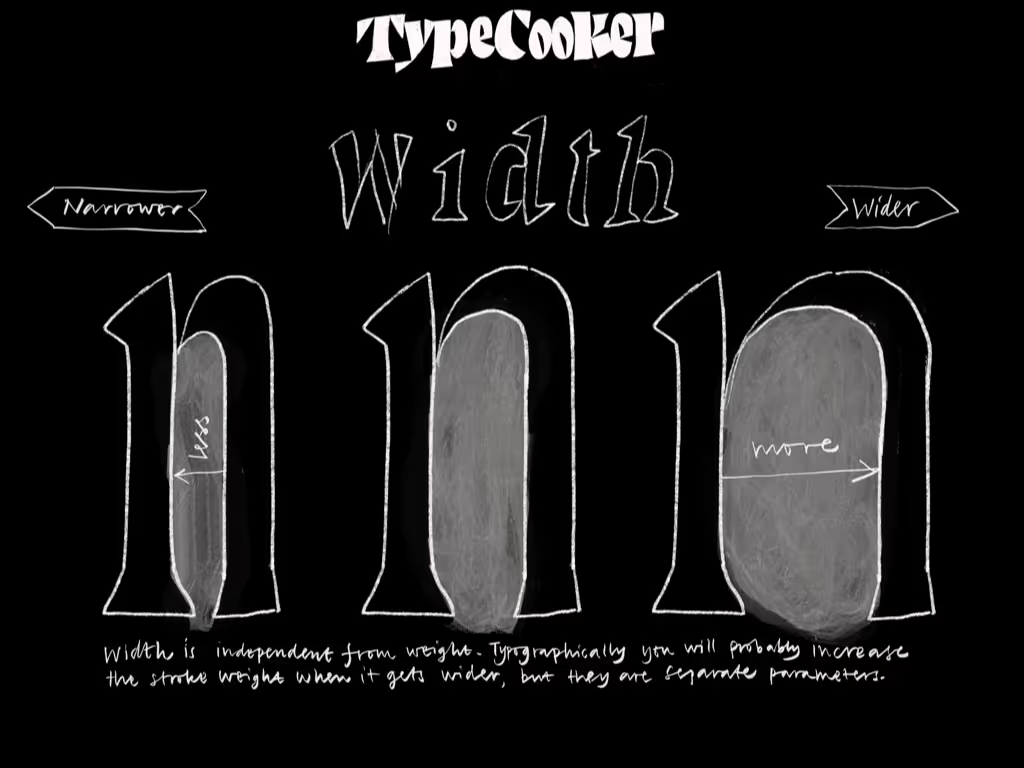
Observe how the density of the shape changes when it gets narrower. Same amount of black, less white, it gets darker.